Aluminium formwork has become a widely adopted solution in modern concrete construction due to its high reusability, fast installation, and consistent concrete quality. Commonly used in residential towers, apartments, hotels, and other repetitive building projects, aluminium formwork helps contractors improve construction efficiency while reducing labor requirements and material waste. This guide explores the main types of aluminium formwork, key system components, design considerations, and typical applications to help construction professionals better understand how aluminium formwork systems work.
Why Aluminium Formwork Is Widely Used
The increasing demand for shorter construction schedules and higher-quality concrete structures has driven the adoption of aluminium formwork worldwide.
Some of the key advantages include:
Faster Construction Cycles
Aluminium formwork systems are manufactured as standardized components that can be assembled and dismantled efficiently. This helps contractors achieve shorter floor cycles and improve project productivity.
High Reusability
Unlike timber formwork, aluminium panels can be reused many times when properly maintained. This significantly reduces material consumption over the lifecycle of a project.
Better Concrete Finish
The precision manufacturing of aluminium panels helps produce:
- Smooth concrete surfaces
- Better wall verticality
- Improved slab flatness
- More accurate dimensions
This can reduce the need for plastering and additional finishing work.
Lightweight Components
Aluminium weighs much less than steel, making panels easier to transport, handle, and install on site.
Sustainable Construction
Because aluminium formwork generates less construction waste and can be reused repeatedly, it supports more sustainable building practices.
Types of Aluminium Formwork Systems
There are two primary aluminium formwork system types used in building construction. Each caters to different project requirements by fulfilling the structural and functional needs of a wide variety of construction projects. The types include:
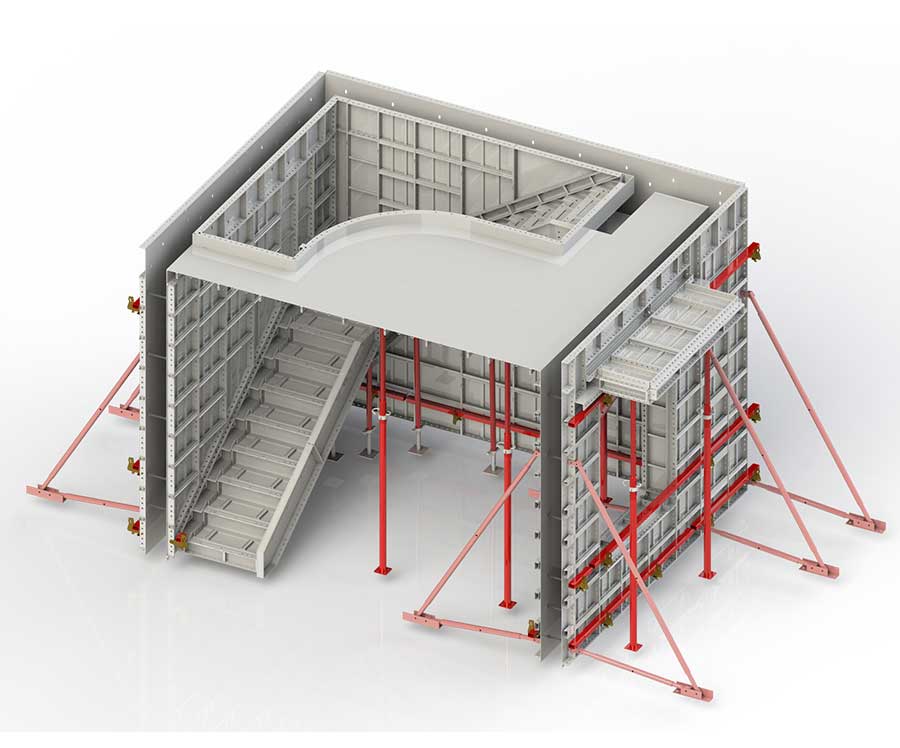
Flat-Tie System
This formwork system features internal connectors and flat ties to fix formwork panels together. It requires less accessories for assembly and provides higher precision. Without tie-rod holes, it achieves a smoother concrete surface finish.
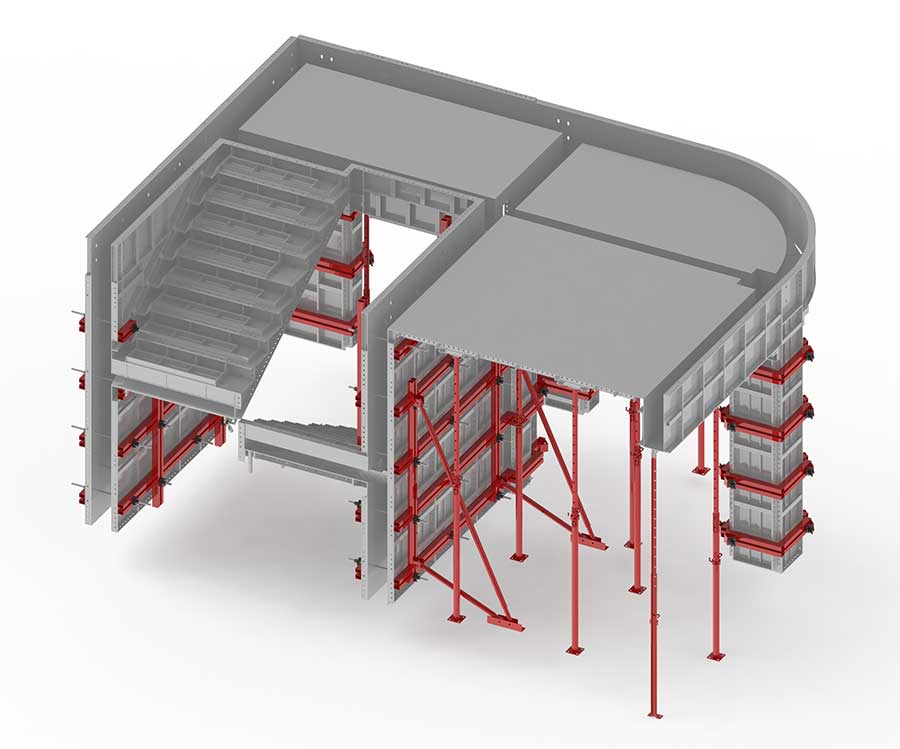
Tie-Rod System
With external connectors and tie rods passing through the panels, the tie-rod aluminium formwork system delivers high strength and stability essential for renovation projects or structures with a wall thickness of over 400mm. Its versatility enables formwork refurbishment and repeated usage on multiple floors of high-rise buildings.
Major Components of Aluminium Formwork
Panels, connectors, and bracing elements are the core component categories of an aluminium formwork system. These components work together to enable smooth construction.
Panels
Panels act as the main load-bearing parts and come in various types to serve different purposes. Wall panels are the most commonly used and contain tie rod holes for the construction of walls. Wall top panels are utilized for the tops of walls. Column panels form the molds for column construction. Crane-way panels provide paths for cranes to travel on during high-rise building works.
Connectors
Connectors play a vital joining role. External joint connectors fix panels on the outside of structures. Internal joint connectors are used between adjacent panels from inside. Beam corner joints connect wall and beam panels at angled positions. The sturdy designs of these connectors guarantee panels are firmly interlocked and free of gaps or misalignment.
Bracing
Temporary bracing elements provide crucial stability to support beams, roofs, and more during construction. Kicker braces support the base of beams. Soffit braces are attached to slab undersides. Semi-circular rocker braces resist uneven loading on curved structures. The adjustable bracing connections conform to irregular profiles and deliver maximum safety even under high load conditions.
Common Applications of Aluminium Formwork
Modern aluminium formwork systems are widely used across different building types.
Residential Towers
Residential towers are among the most common applications because their repetitive floor layouts maximize the benefits of reusable formwork.
Advantages include:
- Faster floor cycles
- Consistent quality
- Reduced labor requirements
- Higher reuse rates
Apartment Developments
Large apartment projects often contain hundreds of identical units.
The repetitive nature of these developments allows aluminium formwork to achieve significant cost savings over multiple construction cycles.
Villas and Housing Projects
For villas and low-rise housing projects, aluminium formwork helps contractors improve dimensional accuracy and maintain consistent construction quality.
Projects with shear-wall structures can particularly benefit from systemized formwork solutions.
Hotels
Hotels frequently feature standardized room layouts that are well suited to modular aluminium formwork systems.
This allows contractors to accelerate construction while maintaining consistent room dimensions throughout the project.
Commercial Buildings
Many commercial developments contain repetitive structural elements such as:
- Walls
- Columns
- Slabs
- Staircases
Aluminium formwork can help improve productivity while ensuring high-quality concrete finishes.
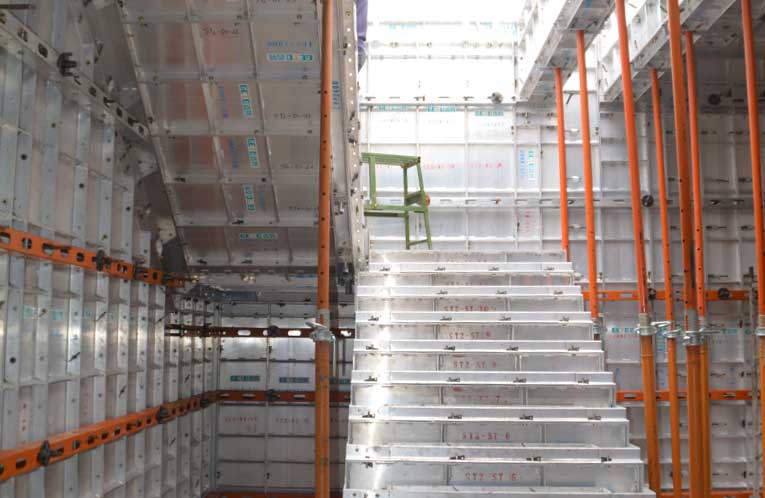
Aluminium Formwork Components Overview
| Component | Primary Function |
|---|---|
| Wall Panel | Forms concrete walls |
| Slab Panel | Forms concrete slabs |
| Beam Panel | Forms reinforced concrete beams |
| Column Panel | Forms structural columns |
| Connector | Joins adjacent panels |
| Tie Rod | Resists concrete pressure |
| Pin & Wedge | Creates secure panel connections |
| Brace | Provides structural stability |
| Crane-Way Panel | Supports crane access |
| Wall Top Panel | Completes upper wall sections |
Together, these components create a complete engineered formwork solution capable of supporting complex construction projects.
Why Contractors Choose GETO Aluminium Formwork
As a leading formwork manufacturer, GETO provides comprehensive aluminium formwork solutions supported by engineering expertise and manufacturing capabilities.
Key advantages include:
Engineering Support
GETO provides project-specific design solutions based on structural requirements and construction objectives.
Manufacturing Capability
With multiple production facilities and advanced manufacturing technologies, GETO can support large-scale projects worldwide.
Product Quality
Strict quality control procedures and premium aluminium alloys help ensure system reliability and durability.
One-Stop Solutions
In addition to aluminium formwork, GETO offers:
- Scaffolding systems
- Shoring systems
- Precast solutions
- Equipment leasing
- Technical support services
Technical Service
Professional teams provide assistance with:
- Design optimization
- Installation guidance
- Technical training
- Maintenance support
Conclusion
Aluminium formwork systems have transformed modern concrete construction by providing a faster, more precise, and highly reusable alternative to traditional formwork methods. Whether using a Flat-Tie System for smooth concrete finishes or a Tie-Rod System for higher structural demands, contractors can select solutions that match specific project requirements.
Understanding aluminium formwork types, major components, and design processes is essential for maximizing construction efficiency and achieving consistent project results. With proper engineering, manufacturing, and project planning, aluminium formwork can help improve productivity, reduce costs, and support high-quality construction across residential, commercial, and infrastructure developments.
FAQ
What are the different types of aluminium formwork systems?
The two primary types are the Flat-Tie System and the Tie-Rod System. Each is designed to meet different structural requirements and construction conditions.
What are the main components of aluminium formwork?
Major components include panels, connectors, tie rods, pins, wedges, and bracing systems that work together to form and support concrete structures.
How is aluminium formwork designed?
The process typically includes drawing review, formwork layout design, engineering verification, manufacturing, and site installation planning.
Is aluminium formwork suitable for high-rise buildings?
Yes. Aluminium formwork is widely used in high-rise residential and commercial projects because of its high reusability, dimensional accuracy, and efficient construction cycles.
Can aluminium formwork be reused?
Yes. Aluminium formwork is designed for repeated use, making it a cost-effective solution for projects with repetitive structural layouts.
Why is aluminium formwork becoming more popular?
Contractors increasingly choose aluminium formwork because it improves construction speed, enhances concrete quality, reduces waste, and provides long-term economic benefits through repeated reuse.